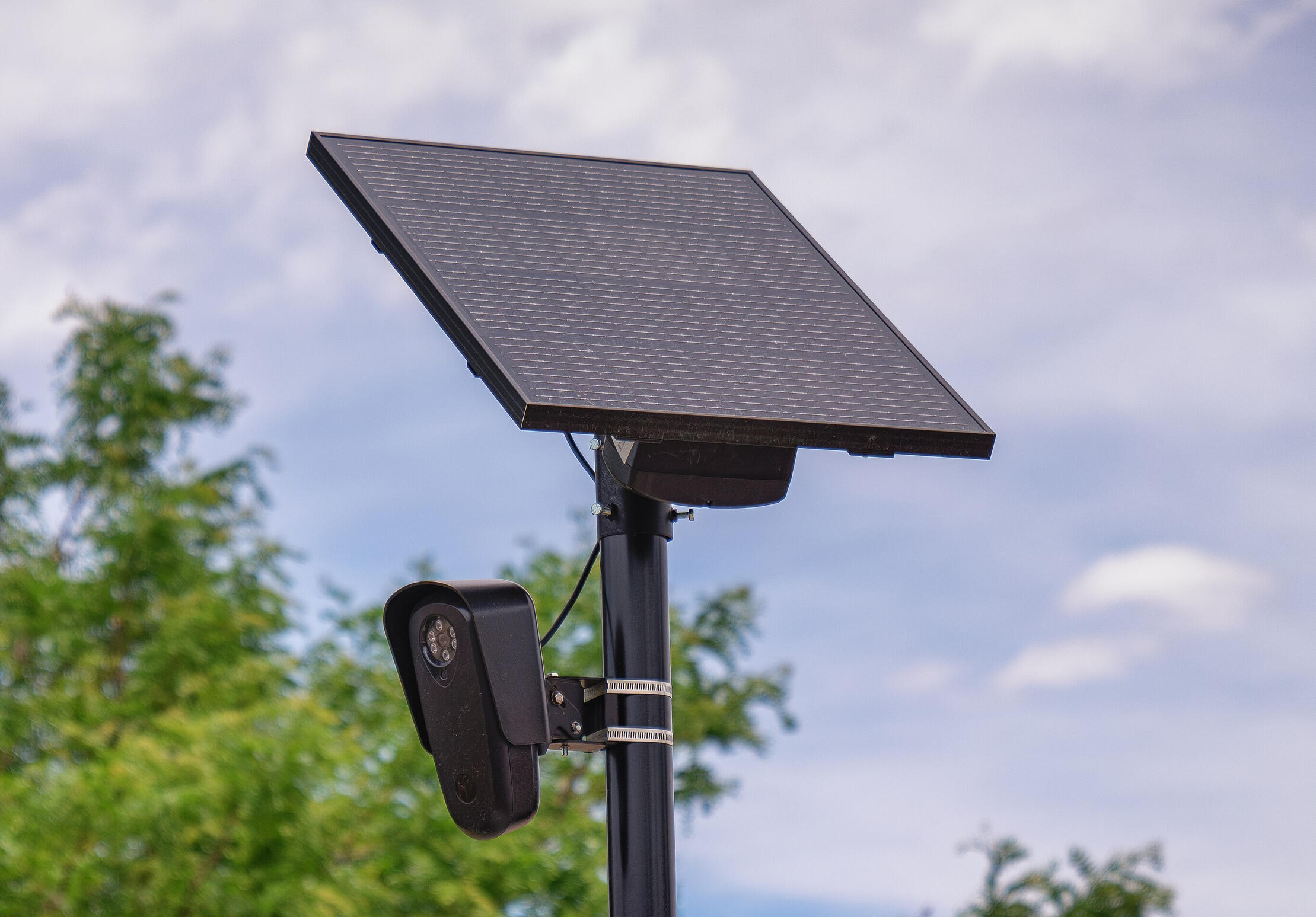
You are being tracked
In 2023, Harrisonburg city council approved the installation of 30 automated license plate readers (ALPRs). These Flock "safety" cameras take pictures of every car that passes them. There was no public input when this decision was made.After months of community organizing, on July 14th, 2026, City Council announced their intent to terminate the contract with Flock on July 28th, and draft a policy and resolution to discourage the introduction of any other ALPR system, while falling short of enacting a permanent ban in the form of an ordinance.
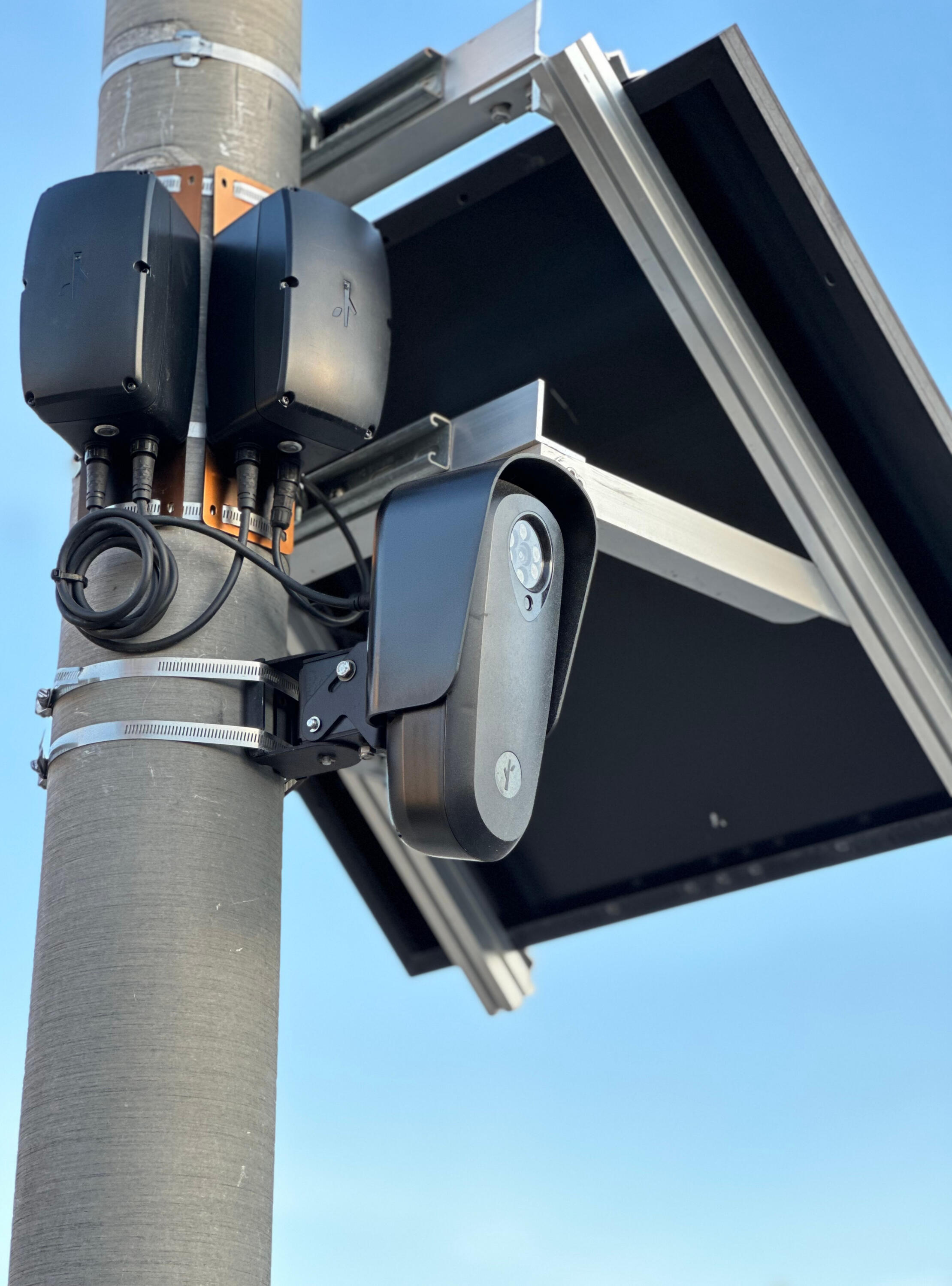
What's the problem?
Automatic license plate readers (ALPRs) are AI surveillance technology designed to track, collect, and store the movements of every traveler. ALPRs are a digital dragnet that capture information about millions of people who’ve committed no crimes. They pose serious threats to our safety, liberty and privacy. The city has contracted with a $8.4 billion tech startup company–Flock “Safety”--funded by Peter Thiel of Palantir and others. This private company (and others like it) aims to create a seamless system of surveillance nationwide.ALPRs radically transform the consequences of leaving home to pursue private life. They create tremendous opportunity for abuse by private companies, the police, and the government. The abuse of the data collected by ALPRs has been prevalent and well documented. ALPRs have been used to surveil people because of political views, sexual orientation, and immigration status, intimate partners, women seeking reproductive healthcare, and Black and Brown people. ALPR databases have been accessed by federal agencies to include ICE, DHS, ATF, CBP, and other out of state law enforcement and government agencies.
What's happened?
Deflock Harrisonburg began as a small team of concerned community members in late January 2026, in response to a relatively new and pervasive form of mass surveillance. Leaning on community connections, the movement has grown into a multigenerational coalition of concerned residents, local organizations including the Harrisonburg Rockingham NAACP, Shenandoah Valley DSA, Mennonite Action, Indivisible, inter-faith groups, and more.At its outset, the grassroots organization started a petition that has garnered a combined 2,000 signatures. In March, the group took over 35 residents to city council and addressed city council with a demand to take the cameras down. Council unmoved, they hosted an educational info session in April attended by over 150 people and expert guest speakers Rob Poggenklass, Executive Director of Justice Forward, and Dr. Steven Keener, Associate Professor at Christopher Newport University and colleague at The Center for Crime, Equity and Justice Research and Policy.Among those in attendance was Councilwoman Monica Robinson, who emphasized that council would center the voices of the community in their decision making, although they work closely with Harrisonburg Police department and the interests of public safety. “My ears are not closed to what’s going on, so I don’t want people to think that we are sitting by to say oh well, we have to do what HPD suggests that we do. No what we do is what our constituents want us to do. That’s what we do.”With mounting pressure, the team initiated a letter campaign which net over 3700 letters to council members, constantly warning of dangers of the technology and making requests to end the contract. Delegations of community members met with each council member to explain the issue in detail, and to understand council concerns and hesitations. The group hosted further outreach and educational sessions, multiple direct actions including several days of neighborhood canvassing informing hundreds of neighbors, an art build, finally culminating in a mass attendance at the July 14, 2026 council meeting, where City Council pledged to remove the ALPRs from the city.After the July 14th meeting, over two dozen Deflock Harrisonburg members worked together to submit a draft resolution to City Council that would immediately end the contract with Flock and ban the use of any other ALPR and mass surveillance systems within the city:
Our Draft Resolution
SUBMITTED FOR CITY COUNCIL CONSIDERATION JULY 16 2026RESOLUTION FOR THE REMOVAL OF AUTOMATED LICENSE PLATE READER (ALPR) CAMERAS, CANCELLATION OF THE FLOCK CONTRACT, PREVENTION OF SUCH FUTURE CONTRACTS, AND PLAN FOR PUBLIC INPUT PRIOR TO CONSIDERATION OF FUTURE SURVEILLANCE TECHNOLOGYIN HARRISONBURG CITY, VIRGINIAWHEREAS, the Harrisonburg City mission is to be a harmonious, caring, welcoming city where differences are embraced, celebrated, and accommodated. It is a city that aims to allow all people to feel safe, valued, and have abundant opportunities;WHEREAS, Harrisonburg City has a documented history of systemic racism, segregation, and structural inequities that have disproportionately affected its Black and minority communities. This history includes the so-called urban renewal of the 1960s, which the City has begun to take steps to heal from;WHEREAS, Harrisonburg City governance is committed to transparency, democracy, and community engagement;WHEREAS, the surveillance tool known as Automated License Plate Readers (ALPRs) are high-speed, AI-enabled cameras capable of capturing and processing detailed images of vehicles, including license plates, make, model, color, occupants, and surrounding areas, along with precise time and GPS location data regardless of suspicion of wrongdoing;WHEREAS, ALPRs capture and store data from all vehicles scanned, not just those connected to investigations, creating vast databases with photos numbering in the billions that can be retained indefinitely and shared with private companies, federal agencies, and out-of-state law enforcement;WHEREAS, numerous documented incidents demonstrate ALPR data misuse and abuse, including unauthorized access by federal agencies such as Immigration and Customs Enforcement, Customs and Border Patrol, and the Bureau of Alcohol, Tobacco, Firearms and Explosives for immigration enforcement activities without consent;WHEREAS, bipartisan majorities in the Virginia General Assembly have repeatedly rejected proposals to expand ALPR surveillance, including bills in 2023 and 2024, yet state and local agencies have circumvented legislative intent by allocating public funds—such as $8.1 million in ARPA grants—to expand surveillance technology across Virginia;WHEREAS, the deployment of ALPR systems, marketed aggressively by Flock Safety—an $8.4 billion surveillance company—poses grave risks to privacy, civil liberties, and democratic freedoms, with no conclusive evidence showing that ALPRs reduce crime (only 47 out of one million scans are connected to serious offenses);WHEREAS, the Virginia State Crime Commission has acknowledged that ALPR deployment disproportionately targets Black and Brown communities, exacerbating racial disparities in policing and the criminal legal system;WHEREAS, the lack of meaningful restrictions or penalties for ALPR data misuse, coupled with the integration of artificial intelligence into surveillance practices, heightens the potential for abuse, false identifications, and suppression of lawful dissent;WHEREAS, 87 municipalities, including Staunton, and Charlottesville, have discontinued use of ALPR systems after evaluating these concerns;WHEREAS, since 2023, Harrisonburg has contracted with Flock Safety to operate a growing array of ALPR cameras in the city;
WHEREAS, the city was entered into this contract by the Harrisonburg Police Department without the free, prior, and informed consent of city residents;WHEREAS,residents of public housing in Harrisonburg managed by the Harrisonburg Redevelopment and Housing Authority, a body governed by a city-appointed board, have been subject to surveillance at their homes by a Tsunami camera system for years;WHEREAS, residents across Harrisonburg and neighboring communities have raised concerns regarding privacy, data security, and the scope of surveillance created by these systems.THEREFORE, BE IT RESOLVED by the Council of the City of Harrisonburg, Virginia that:
1. The City Manager or Deputy City Manager is authorized and instructed to immediately end all of Harrisonburg’s contracts with Flock Safety.
2. The City of Harrisonburg and its departments are not authorized to enter into or renew contracts with mass surveillance companies, including any vendors of ALPR cameras, audio sensors (“gunshot detectors”), wireless signal sensors, or vendors of other data aggregation services or technologies.
3. The City Manager or Deputy City Manager is authorized and instructed to direct city staff to physically cover all ALPRs on public property and rights-of-way in order to prevent the collection of additional license-plate data until the cameras are removed.
4. The City Council will, with input from the public, draft and pass an ordinance by the end of the current calendar year to ban the use of mass surveillance technologies, including, but not limited to ALPRs, Audio Recording Devices, First Responder Drones, Wireless Signal Sensors, and surveillance data aggregation services.
5. The aforementioned ordinance will also ensure mandatory and meaningful public oversight of police procurement processes, whether using municipal, state, federal, or private funds or grants, through the establishment of a procurement registry, public oversight board, and public input protocols in order to ensure the free, prior, and informed consent of Harrisonburg residents in these processes and in order to safeguard the rights and dignity of all in the City of Harrisonburg.
What can we do about it?
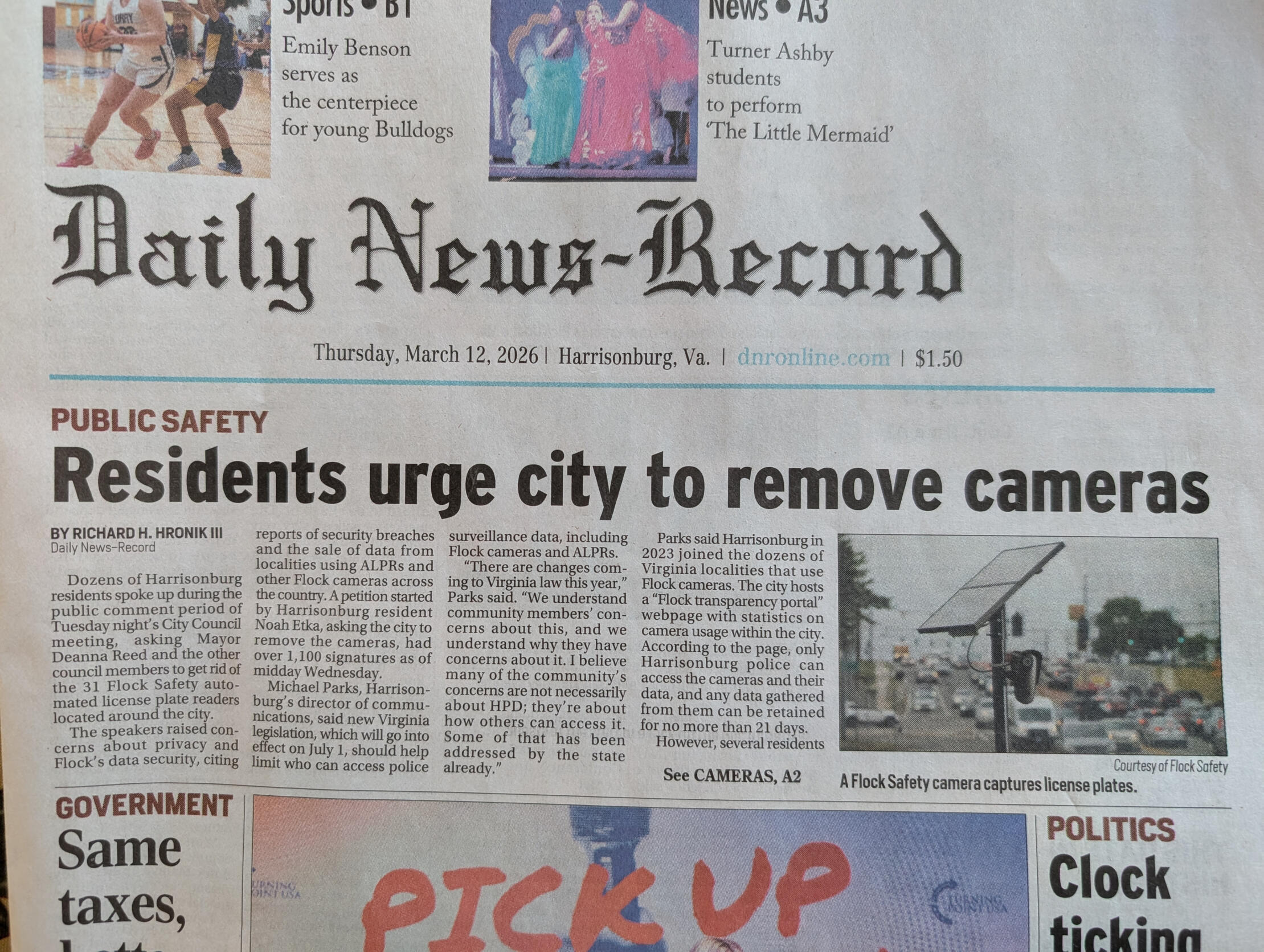
1) Join over 2,000 people who have already signed an online petition asking city council to remove Flock cameras from Harrisonburg.
2) Take 30 seconds to email city council members. This lets them know directly that their constituents support the removal of Flock cameras.
2) Join us at City Hall on July 14 and July 28 at 7:30 pm. We'll be physically present to let city council know just how many people care about this issue.
ALPR Mythbusters....FACT or FICTION?
In April 2026, Harrisonburg Police Department presented to city council an "Overview of Automatic License Plate Readers (ALPRs)," following pushback from community members about the mass surveillance technology that was installed in the Friendly City without public input. Here is our response to that presentation.1. HPD Claim: Virginia law (H.B. 2724) prevents federal access to ALPR data by limiting local law enforcement in Virginia from sharing ALPR data with out of state or federal agencies.
Fiction. The federal government is not constrained by Virginia’s ALPR law. As a result, HB2724 provides no meaningful restrictions on the ability of other states, private parties, and the federal government to access Virginia ALPR data through subpoenas or search warrants (including subpoenas/warrants issued to Flock’s headquarters in Georgia).2. HPD Claim: Flock “Safety” does not contract with ICE or DHS.
Fiction. In August of 2025, it was uncovered that Flock “Safety” was running a pilot program with the Department of Homeland Security's Customs and Border Protection and its law enforcement arm, Homeland Security Investigations, despite previously stating otherwise.3. HPD Claim: ALPR cameras only collect license plate text, date/time, camera location, and basic vehicle attributes (make/model/color) - all observable from public roadways. “We can’t see the driver of the vehicle or any passengers, personal information on the registered owner, or driver DMV information.”
Fiction. ALPRs are always on, data entries can be in the billions. They are capable of capturing still images and/or videos– which is converted into machine-readable text, as well as a substantial part of the vehicle which can include the make, model, color, occupants, interior, bumper stickers and other unique features, and the immediate vicinity. These images and license plate text are paired with information on the date, time, and GPS location of where the vehicle was detected. A key part of the ALPR system is the accumulation of a vast amount of data and the availability of this data for effortless retroactive searching. Such tracking and searching is categorically different from isolated public observations or even short-term tracking of vehicles.4. HPD Claim: Flock uses CJIS-aligned controls, and their ALPR cloud storage platform has never been Compromised.
Fiction. Flock ALPR data is stored in a cloud server managed by Amazon Web Services (AWS). AWS has been hacked as recently as December of 2025. ALPR data is also initially saved on the physical camera itself, and can also be downloaded and saved onto individual hard drives managed by Virginia law enforcement creating additional security concerns.5. HPD Claim: ALPR data is deleted after 21 days.
Fiction. Virginia law allows law enforcement to use photos from ALPRs and store it indefinitely for any “criminal investigation where there is a reasonable suspicion that a crime was committed”—an expansive definition that includes crimes like jaywalking and littering.6. HPD Claim: Virginia law ensures appropriate use of the ALPR technology with routine audits, and criminalizes misuse of data– a Class 1 Misdemeanor.
Fiction. Virginia law allows the police to police themselves, audits are reviewed by VSP and not made public. In Virginia, internal police records about misconduct allegations are also almost always kept secret. You cannot have accountability without meaningful oversight.In addition, a newly released 2026 Virginia State Crime Commission report shows that Virginia law enforcement agencies are currently violating state laws without any accountability:13% of Virginia law enforcement agencies acknowledge they are continuously sharing ALPR data with other states
6% acknowledge sharing with the federal government
35% of those Virginia law enforcement agencies admitted taking no public awareness measures relating to their ALPR use
Only 251 of 361 agencies bothered to respond to the survey required by state legislationMore recently, a Richmond, Virginia Commonwealth Attorney declined to prosecute an RPD sergeant who unlawfully shared ALPR data with the FBI.7. HPD Claim: Data from ALPR cameras is not used for any First Amendment protected activity.
Fiction. From June to October 2025 the Electronic Frontier Foundation (EFF) identified 19 agencies that logged dozens of searches associated with the No Kings protests to include Virginia Police.8. HPD Claim: Since their Installation, ALPR cameras helped recover or identify stolen vehicles, missing persons, violent crime suspects, and assisted in hit-and-run investigations.
Answer: Without evidence, these are cherry picked anecdotes.They are just saying “trust us, this is how they help”. Blanket statements like these lack transparency and require community members to just take the same people lobbying for these cameras at their word.9. HPD Claim: In United States v. Martin, the court rejected the "mosaic theory, and In Schmidt v. City of Norfolk, the U.S. District Court for the Eastern District of Virginia ruled that the City of Norfolk’s use of Flock Safety Automated License Plate Readers (ALPRs) does not violate Fourth Amendment protections against unreasonable searches.
Fiction. SCOTUS has not ruled on the mosaic theory of the Fourth Amendment and Schmidt is currently on appeal to the Fourth Circuit.
join us
We are a grassroots group of residents concerned about mass surveillance in Harrisonburg.This summer, we will be door knocking in neighborhoods and raising awareness at intersections in town with Flock cameras. If you'd like to get involved in these and other activities, join our Signal channel and follow us on social media.